

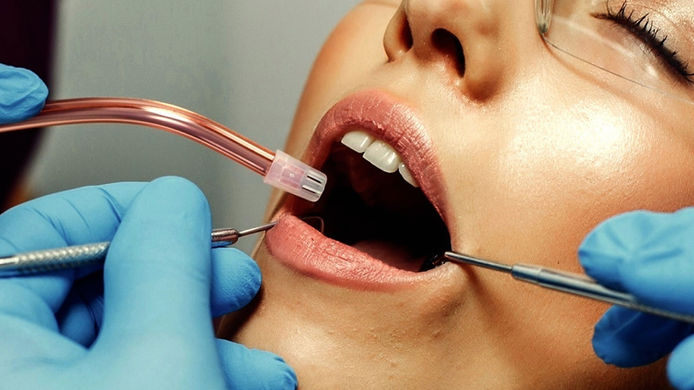
Short answer: Tooth reshaping is the controlled removal of a very small amount of tooth enamel to adjust the shape of a tooth or its relationship with the neighboring teeth. In cosmetic contouring, irregularities at the edges are smoothed out; in orthodontics, under the name IPR, a small amount of enamel is removed from the side surfaces of the teeth to create space for alignment. It is generally accepted that it does not harm the teeth when done in the right amount and in a planned way.
Tooth reshaping is the controlled removal of a very small amount of tooth enamel to adjust the shape or length of a tooth, or its relationship with the neighboring teeth. Known in everyday Turkish as "törpüleme" (filing), this procedure is used in dentistry for two different purposes: cosmetic tooth contouring aimed at smoothing out small irregularities at the edges of the teeth, and interproximal reduction (IPR), done in orthodontic treatment to create space for the teeth. In this article, we explain both procedures, whether they are harmful and who they are suitable for.
What is tooth reshaping?
Tooth reshaping is a minimal procedure, usually not requiring anesthesia, in which tissue is removed at the level of fractions of a millimeter from the surface of the enamel layer or from the side surfaces of the teeth. Enamel is the outermost and hardest layer of the tooth; since it contains no nerves, a limited amount of reduction often cannot be felt.
This procedure is very different from the extensive reduction done to prepare a tooth for a crown. Whereas more tissue is removed from the tooth surface when preparing for a crown or veneer, the aim in reshaping and IPR is to preserve as much enamel as possible and remove only the very small amount that is necessary. For this reason, enamel thickness, the shape of the tooth and X-ray findings are taken into account before the procedure.
Cosmetic contouring
Cosmetic tooth contouring (enameloplasty) is the gentle reduction and polishing of enamel to remove small chips, notches, pointed tips or differences in length at the edges of the teeth. It is usually completed in a single session, and the result is visible immediately.
- Edge irregularities: Small notches and rough spots on the biting edges of the front teeth can be corrected.
- Differences in length: The length of a tooth that looks noticeably longer than its neighbors can be balanced, provided the reduction stays within the enamel.
- Pointed canines: The tips of canines that look very pointed can be rounded slightly. However, since these teeth play an important guiding role in chewing and jaw movements, the procedure is planned together with an assessment of the bite.
- Fine-tuning after orthodontics: Small differences remaining in the alignment of the tooth edges after treatment can be corrected.
Cosmetic contouring is a useful method for fine-tuning a smile; however, it does not solve major shape irregularities, marked crowding or color problems. In such cases, orthodontic treatment, composite bonding or other restorative options are considered.
IPR in clear aligner treatment
IPR (interproximal reduction) is the creation of the space needed to align the teeth in orthodontic treatment by removing a very small amount of enamel from the side surfaces where the teeth touch each other. It is also known as interproximal enamel reduction, slenderizing or "stripping." It can be used both in treatments with fixed braces and with clear aligners.
Why is it needed?
Crowding occurs when the teeth do not fit in the dental arch. There are several ways to create this space: widening the dental arch, tipping the teeth forward, rarely extracting teeth, or slightly reducing the width of the teeth with IPR. In mild to moderate crowding, IPR can help gain space without the need for tooth extraction. If you are curious about how crowding is treated with clear aligners, you can take a look at our treating crowding with clear aligners page.
Other uses of IPR include:
- Balancing width discrepancies between the upper and lower teeth
- Reshaping contact points to reduce the dark triangular spaces that form between the teeth due to gum recession
- Giving the teeth a more harmonious shape
How is it done?
At our clinic, clear aligner treatment is provided with Invisalign, and whether IPR will be done, between which teeth and how much, is determined in advance at the digital treatment planning stage. The procedure is usually done at a specific stage of treatment, at a checkup appointment when the teeth have reached an accessible position. Generally, between a tenth and a few tenths of a millimeter of enamel is removed from each contact point. This is done with fine abrasive strips, special discs or burs; the surfaces are then smoothed and polished. Since the reduction stays within the limits of enamel thickness, anesthesia is not needed in most cases.
You can find details of how clear aligner treatment works in general and its stages on our clear aligner treatment page.
Is it harmful?
It is generally accepted that, when done for an appropriate indication, in the right amount and with careful technique, tooth reshaping and IPR do not harm the teeth and do not significantly increase the risk of cavities or gum disease. Clinical studies on this subject show that when the reduction stays within the safe limits of enamel thickness and the surfaces are well polished, long-term negative effects are limited.
Nevertheless, some points should be kept in mind:
- Temporary sensitivity: Some people may experience brief sensitivity to cold after the procedure; it usually goes away on its own.
- Excessive reduction: Removing more enamel than planned can expose the dentin and increase sensitivity and the risk of cavities. For this reason, the amount is measured and applied in a planned way.
- Surface roughness: Unpolished surfaces can increase plaque retention; careful polishing after the procedure is important.
- Oral hygiene: Regular brushing and flossing after the procedure, and fluoride application when the dentist recommends it, are protective.
Small gaps between the teeth may be noticed after the procedure. These gaps are planned to close as the teeth move in later stages of treatment.
What should you pay attention to after the procedure?
No special recovery period is needed after tooth reshaping or IPR; you can return to daily life immediately. Still, if you feel slight sensitivity to very cold drinks in the first days, using a toothpaste made for sensitive teeth can bring relief. It is important to keep flossing so that food does not collect at the new contact points between the teeth. Clear aligner wearers need to continue wearing their aligners in the order the orthodontist specifies after the procedure.
Who is it suitable for?
Tooth reshaping and IPR may be suitable for people with good oral hygiene, enamel of sufficient thickness, and mild to moderate crowding or small shape irregularities. Suitability is determined by the dentist through an intraoral exam and the necessary records.
Situations where it may be suitable
- Mild to moderate crowding
- Dark spaces between teeth caused by triangular-shaped teeth
- Small notches and length differences on the biting edges
- Width discrepancy between the upper and lower teeth
Situations that call for caution
- A high risk of cavities and inadequate oral hygiene
- Thin enamel or enamel developmental defects
- Marked tooth sensitivity
- Very small teeth or existing gaps between the teeth
- Severe crowding; in this case, other methods of creating space may be needed
In baby teeth and in permanent teeth that have not yet fully matured in young patients, the structure of the enamel and pulp is different, so the decision to proceed is made more carefully.
Exams for tooth contouring and IPR in Ankara
If you want to correct small shape irregularities in your teeth or consider clear aligner treatment for crowding, an examination of your enamel and your bite is the foundation of the right decision. At our clinic in Park Oran Ofis in Oran, Çankaya, Funda Pekyılmaz Sarıkaya, specialist orthodontist (Uzm. Dt.), explains after the exam whether IPR is needed in your plan. To make an appointment, get in touch with us.
Frequently asked questions
Does tooth reshaping hurt?
Since the procedure is limited to the enamel layer, no pain is felt in most cases and anesthesia is not needed. Some people may experience brief sensitivity to cold after the procedure; this usually goes away on its own.
Do the gaps left between the teeth after IPR close?
Yes, the gaps opened with IPR are used in the treatment plan to align the teeth and are planned to close as the teeth move in later stages.
Does tooth reshaping increase the risk of cavities?
It is accepted that it does not significantly increase the risk of cavities when the reduction stays within the safe limits of enamel thickness and the surfaces are well polished. Good oral hygiene and the fluoride applications your dentist recommends are protective.
Is IPR done in every clear aligner treatment?
No. IPR is planned only when a need for space or a discrepancy in tooth width is identified in the digital treatment plan. Many treatments can be completed without IPR.


