


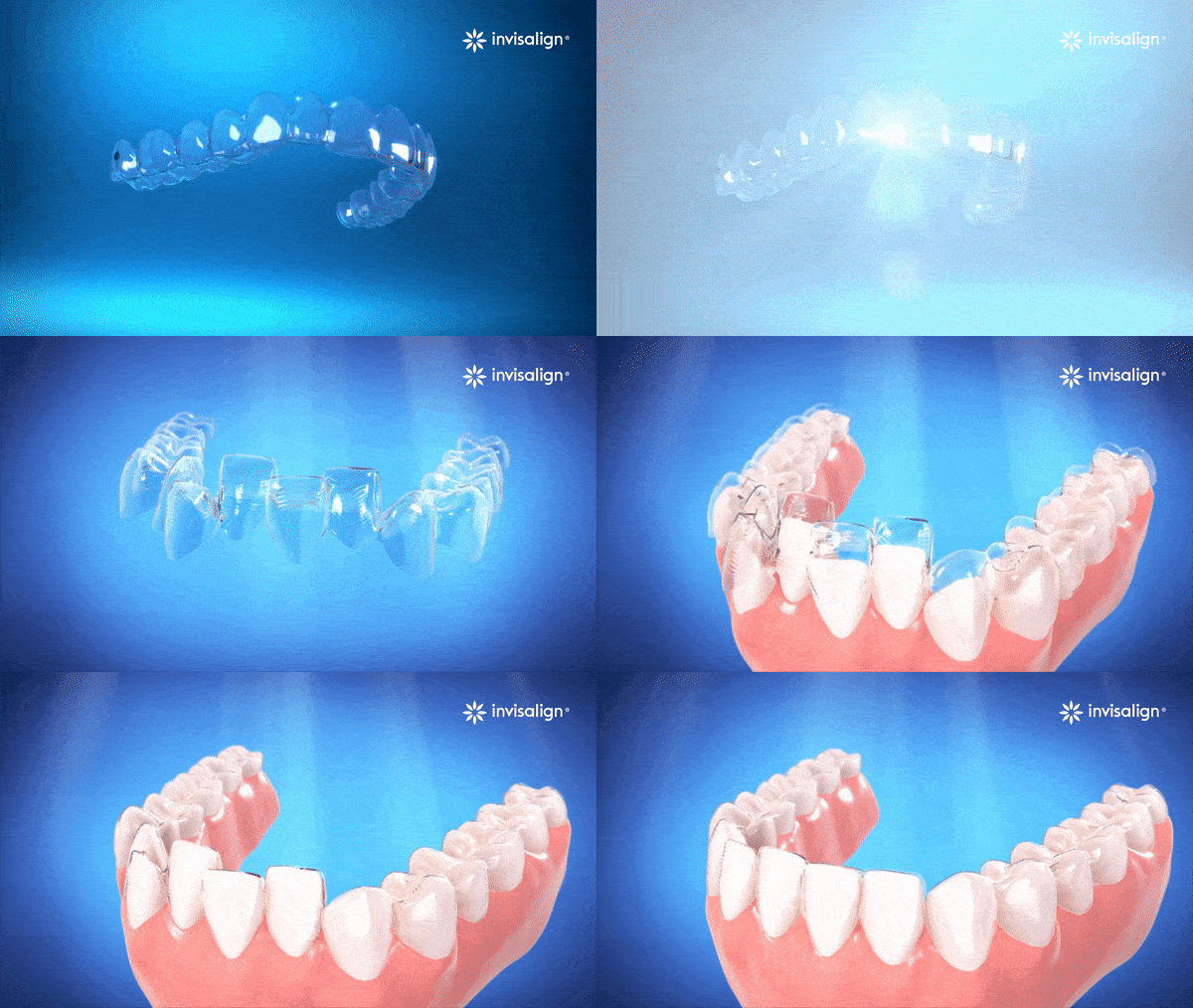
At what age can you get clear aligners?
There is no strict lower or upper age limit for clear aligner treatment. What matters is not calendar age but the stage of dentition (baby teeth, mixed dentition, permanent dentition), gum and bone health, the state of jaw development and the ability to wear the aligners 20–22 hours a day. They can be used in children aged 6–10 in the mixed dentition stage with products designed for children, in teens aged 11–17 with aligners that have compliance indicators, and in adults and older people at any age as long as oral health is good.
On this page we look at four age groups separately: children, teens, adults and older adults. For each group we explain which problems are treated, what to watch for and how compliance is monitored. Final suitability is determined by an orthodontic examination and X-rays.
Are clear aligners used in children (ages 6–10)?
Yes, they can be used during the mixed dentition stage. In this period, baby teeth and permanent teeth are present in the mouth together and the jaws are actively growing. Orthodontic associations recommend that every child have a first orthodontic evaluation around age 7; this allows problems to be spotted early. Not every child needs treatment at this age, but some conditions benefit from early intervention:
- A narrow upper jaw and crossbite (jaw expansion).
- Significant lack of space and preserving room for the permanent teeth to erupt.
- Open bite related to habits such as thumb sucking.
- Protruding front teeth and the risk of trauma.
The clear aligners used in this period are special designs that leave room for the permanent teeth to erupt and support jaw expansion movements; Invisalign First is one of the products developed for this purpose, and some other brands also have children's lines. Early treatment usually takes 6–12 months and is often the first phase of a two-phase plan; a second phase may be needed once the permanent teeth have all come in.
How is compliance monitored in children?
With children, the biggest question is whether the aligner is being worn enough. Children's products and teen aligners have a compliance indicator: small colored marks on the back of the aligner slowly fade as they come into contact with saliva while the aligner is in the mouth. If the mark is still clearly visible when it is time to change aligners, the aligner has not been worn enough. This indicator gives both parents and the doctor an objective way to keep track. In addition, daily monitoring by parents, a routine of putting the aligner in its case and the habit of wearing it during school hours determine success. If there are serious concerns about compliance, the doctor may recommend fixed appliances.
How are clear aligners used in teens (ages 11–17)?
The teenage years are when orthodontic treatment is most commonly done: most permanent teeth have erupted, some skeletal problems can still be guided because jaw growth continues, and tooth movement is relatively fast thanks to the bone response. In this period, clear aligners are used to correct crowding, gaps, bite problems and jaw relationships.
Aligners designed for teens (for example, Invisalign Teen) have the following features:
- Compliance indicators: Fading marks that show how long the aligner has been worn.
- Eruption space: Room left in the aligner for molars that have not yet fully erupted; the aligner adapts as the tooth comes in.
- Replacement aligners: Because teens lose aligners more often, some packages include a set number of replacement aligners.
- Jaw relationship correction: In some systems, special appliance features used for a retruded lower jaw (mandibular advancement) are built into the aligner.
For teens, the aesthetic advantage of clear aligners matters for social self-confidence; they are also less of an obstacle than brackets during activities such as sports and playing musical instruments. On the other hand, the responsibility for compliance lies with the teen. Susceptibility to gum inflammation may increase during puberty; because the aligner is removable, hygiene is easier to maintain. For a comparison with braces, see the clear aligners or braces page. If you are wondering about SGK (Turkish Social Security Institution) coverage for teens, the clear aligners at a state hospital page offers general information.
Why have clear aligners become so common among adults?
A large share of clear aligner users are adults. The reasons are clear: a treatment that is hard to notice at work and in social life, freedom when eating and cleaning, and the ability to see the result in advance with digital planning. Common situations in adults include:
- Crowding or gaps that were not treated in adolescence.
- Relapse of earlier treatment due to neglected retention.
- Increasing crowding of the lower front teeth with age.
- Positioning teeth before implants, bridges or crowns.
- Bite problems that lead to gum recession and wear.
Because jaw growth is complete in adults, skeletal problems cannot be corrected by guiding growth; significant skeletal discrepancies may require collaboration with surgery. Tooth movement may be somewhat slower than in teens and bone response varies; for this reason, the doctor adjusts the aligner change intervals to the individual. Gum health and existing fillings and prostheses are taken into account in planning; details are on the who are clear aligners suitable for page.
Can older adults get clear aligners?
Yes. Orthodontic tooth movement is possible at any age as long as bone remodeling continues, and clear aligner treatment is done for people aged 50, 60, 70 and older. In this group the goal is often functional rather than aesthetic: straightening tipped teeth to create suitable space for a prosthesis or implant, making crowded lower front teeth easier to clean, and stopping wear caused by bite problems. Points to watch include:
- Periodontal condition: Gum recession and bone loss are common with age. In controlled periodontal disease, aligners working with light forces may be suitable; in active disease, periodontal treatment is done first.
- Existing restorations: Bridges, crowns and implants are defined in the plan as fixed or with limited movement.
- Bone response: Because movement may be slower, the aligner change interval may be extended and the treatment duration is planned case by case.
- Medications and systemic conditions: Medications that affect bone metabolism and conditions such as diabetes should be mentioned at the examination.
- Dry mouth: Some medications reduce saliva; additional protective measures are taken against the risk of cavities under the aligner.
In older adults, the fact that clear aligners are removable offers an advantage over brackets for hygiene and gum monitoring.
Differences in treatment time and compliance by age group
Treatment time depends more on the difficulty of the case than on age, but there are general trends. In children, early treatment takes 6–12 months and a second phase may be needed. In teens, because the bone response is fast, moderate cases can be completed in 12–18 months. In adults, similar cases may take somewhat longer. When it comes to compliance, the picture is reversed: adults usually wear their aligners with discipline, while children and some teens need parental support and compliance indicators. At every age, aligners are changed every 7–14 days, checkups take place every 6–10 weeks, and retention after treatment continues at night for life. You can find the daily wear rules on the how to use clear aligners page.
Which brand's product is used at which age?
Some brands have children's and teen lines; Invisalign's First (children) and Teen products are examples, and some other brands offer similar lines. All systems can be used in adults. The brand is chosen based on the needs of the case and the doctor's experience rather than age; details are on the Invisalign page and in our brand comparison. Whether for your child, yourself or an older family member, suitability is evaluated at an orthodontic examination based on the dentition stage and oral health.