

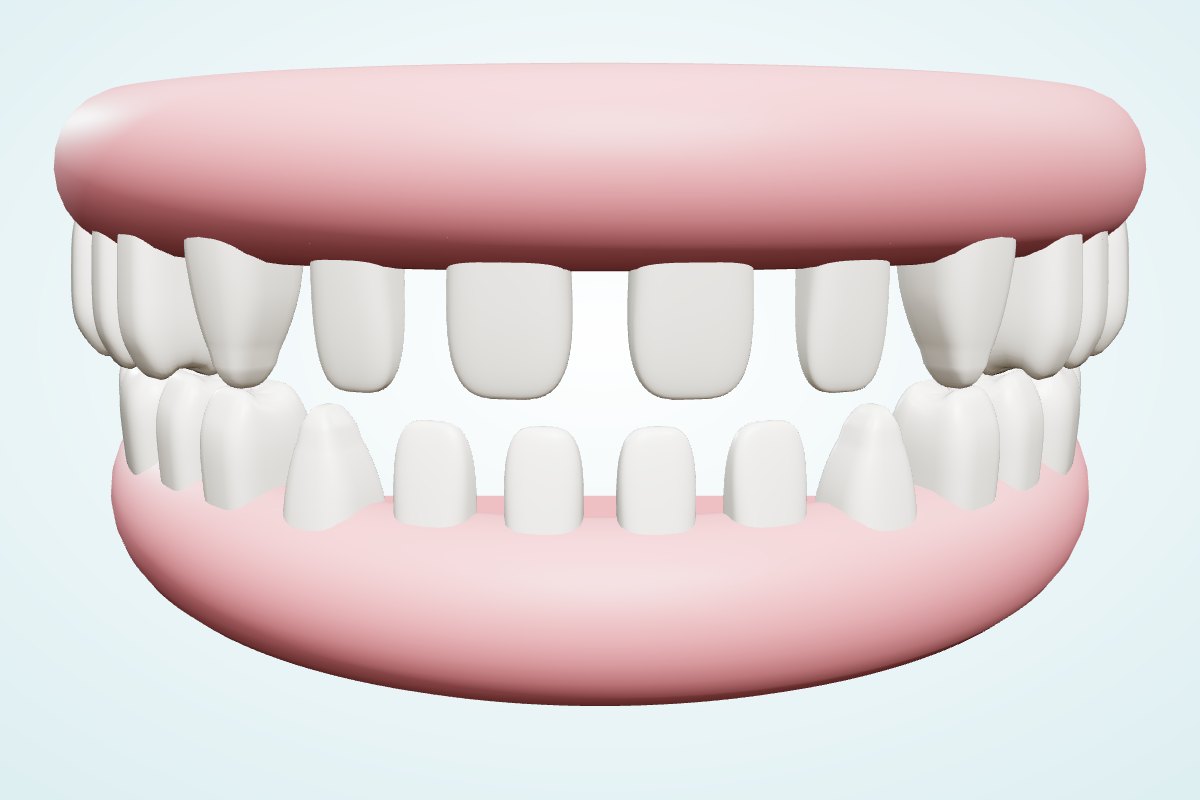
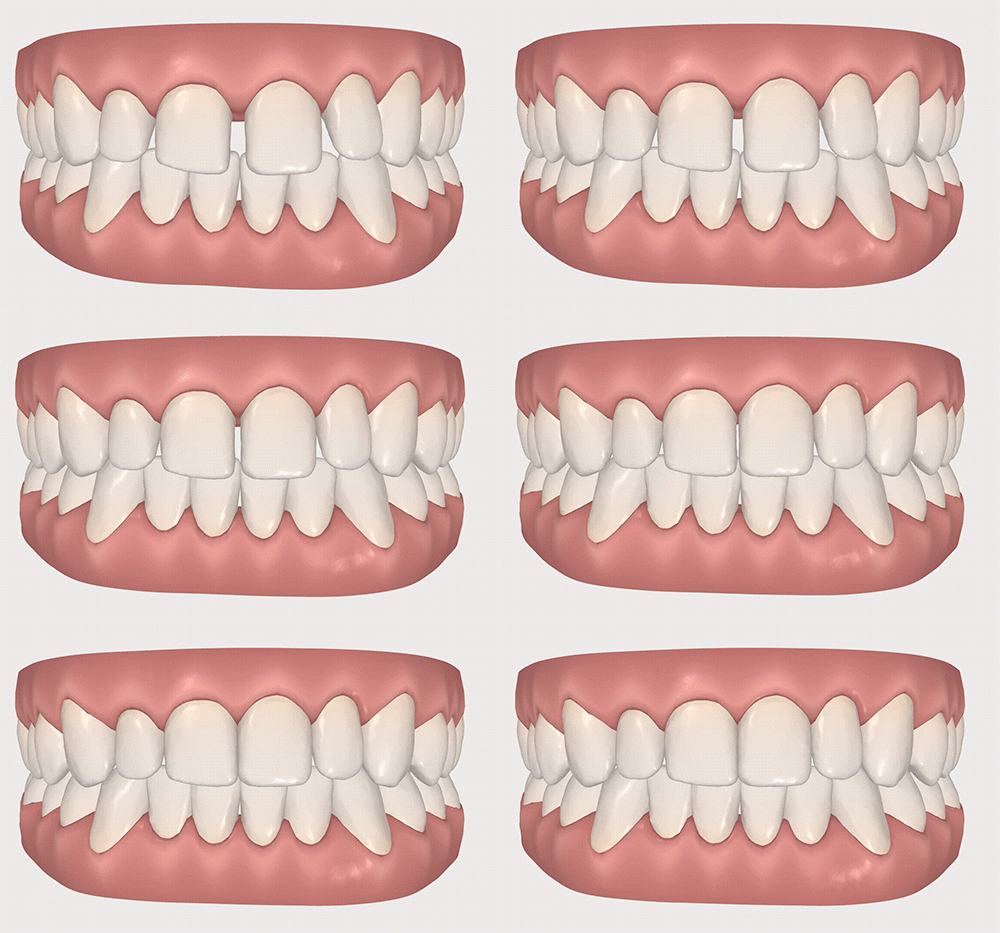
Gaps between teeth, that is, spaces between the teeth (called diastema in orthodontics; the term is used especially for a gap between the two upper front teeth), can be closed with clear aligners in most patients. Because space closure relies on side-to-side sliding, one of the most predictable movements for aligners, the treatment plan is usually simple and the duration relatively short. On the other hand, the cause of the gap matters: if a thick lip frenum, an impacted extra tooth, a missing tooth or small teeth are involved, aligners alone cannot give a lasting result; a gap closed without removing the cause may reopen. For this reason, the cause is determined with X-rays and a clinical examination before treatment.
What is a gap between teeth (diastema) and how is it recognized?
A diastema is a visible gap between two teeth. It is most common between the upper central incisors and may be a single gap or general spacing between all the teeth. The gap is usually easy to notice in the mirror; in some people it only shows when smiling or talking. In the clinic, the gaps are measured in millimeters, the position of the lip frenum and the size of the teeth are evaluated, and a panoramic X-ray is used to check for impacted or missing teeth. The total amount and distribution of the gaps determine the treatment plan and duration.
What causes gaps between teeth?
- Tooth–jaw size mismatch: When the jawbone is large relative to the teeth, spaces remain between the teeth. It is the exact opposite of crowding.
- A thick or low-attached lip frenum: If the band of tissue connecting the upper lip to the gum extends down between the two front teeth, it prevents them from coming together.
- Small or misshapen teeth: Small lateral incisors in particular (microdontia) create spaces.
- A missing tooth: A congenitally absent or extracted tooth causes neighboring teeth to drift and spaces to spread.
- An extra tooth (mesiodens): An additional impacted tooth between the two upper front teeth can be the cause of the gap.
- Habits and tongue thrust: The tongue pressing on the front teeth during swallowing pushes the teeth forward and apart.
- Gum disease: In adults, teeth may move forward and apart due to bone loss.
- Temporary diastema in children: The gap that appears while the permanent front teeth are erupting and the canines have not yet come in often closes on its own.
How do clear aligners close gaps between teeth?
In aligner treatment, the teeth are slid toward each other along the path set in the planning software. The main steps of space closure are:
Side-to-side sliding (translation)
Each aligner brings the teeth next to the gap about 0.2–0.25 mm closer together. The goal is to move not only the crown of the tooth but also its root in the same direction. If the root is not moved, the tooth tips and the gap does not close permanently. For this reason, attachments (small tooth-colored composite bumps) are placed on the front teeth; the aligner grips these bumps to control the root as well.
Distributing the space
A single large gap can first be distributed as small spaces among the neighboring teeth, and these spaces are then closed one by one. This preserves the symmetry of the smile and keeps the midline (the line between the two front teeth) in line with the center of the face.
Elastics and additional support
If the spaces are spread throughout the arch, the back teeth may also need to come forward. In this case, small elastics attached to the aligners or small fixed holding elements support the movement. If there are very small teeth, instead of closing the space completely, the doctor may plan to arrange the teeth with symmetrical spacing and complete the remaining space with aesthetic bonding or veneers.
When are clear aligners alone not enough?
- Lip frenum problem: If the frenum extends down between the teeth, it may need to be cut in a minor procedure (frenectomy). Today, this procedure is usually done after the gap has been closed or during treatment.
- Small teeth: Squeezing the teeth together to close the gap can create a disproportionate smile. The teeth are positioned with aligners, and then the tooth size is built up with composite bonding or veneers.
- Space from a missing tooth: If the gap is due to a missing tooth, there are two options: closing the space by moving the neighboring teeth, or using aligners to prepare a proper space for an implant or bridge. You can find details on the clear aligners with missing teeth page.
- An impacted extra tooth: It is first removed surgically, and then the gap is closed with aligners.
- Spacing due to gum disease: Periodontal treatment is completed first and gum health is brought under control; only then is tooth movement planned.
- Large and widespread gaps: If the total amount of space is very large, aligner treatment takes longer; the doctor may suggest combined treatment with brackets.
How long does clear aligner treatment take for gaps between teeth?
Diastema cases usually take less time than crowding cases. General ranges:
- A single small gap (1–2 mm): About 4–6 months.
- A moderate gap or several spaces: About 6–12 months.
- Widespread spacing throughout the arch, cases requiring additional procedures: 12–18 months.
These ranges are general; consistent wear of 20–22 hours a day and following the 7–14 day aligner change interval set by the doctor directly affect the duration. Additional procedures such as frenectomy or bonding are added to the schedule. For details, see the treatment duration page.
Is diastema treatment different in children and adults?
In children, a gap between the upper front teeth is considered normal around age 8–9 and usually closes on its own when the canines erupt. For this reason, early intervention is generally not expected; if the lip frenum is very thick or there is an impacted extra tooth, only that cause is addressed. If the gap persists after all the permanent teeth have erupted (around age 12–13), aligner treatment can be planned. In adults, gaps do not close on their own. Gum health, bone level and any wear are evaluated beforehand. In adults, diastema is often associated with gum disease or a tongue-thrust habit; if these factors are not brought under control, the gap reopens. For details by age group, see the clear aligners by age page.
Can a closed gap open up again?
Diastema is one of the problems where retention matters most, because after the gap is closed the teeth tend to return to their original position. To reduce relapse:
- Fixed retainer: A thin wire bonded to the back surface of the front teeth. It is usually the first choice in diastema cases and stays in place for many years.
- Removable retainer: A thin, clear tray. It is worn at night in addition to the fixed wire or on its own; the general recommendation is lifelong nighttime wear.
- Addressing the cause: If the lip frenum, tongue thrust or gum disease is not treated, a retainer alone may not be enough. Simple exercises or speech therapy may be recommended for tongue thrust.
For retention options and wear routines, see the retainer after treatment page, and for the general criteria for aligner suitability, see the who is a candidate page.